Bacteriostatic Water vs. Sterile Water for Peptide Reconstitution
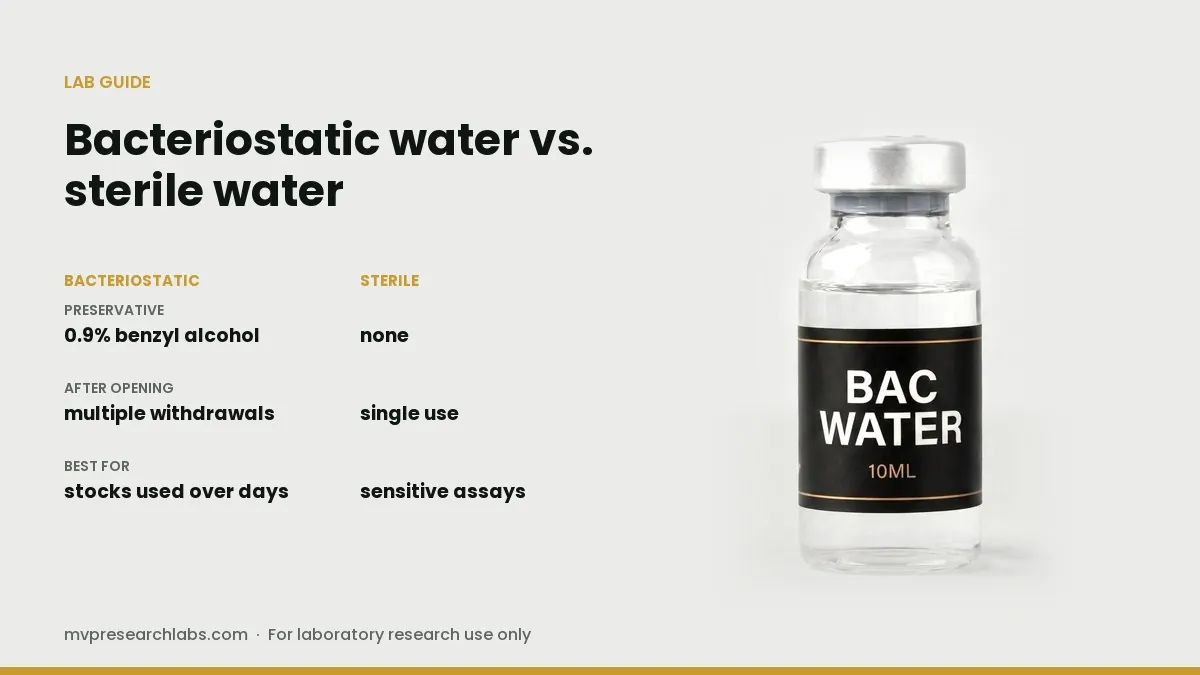
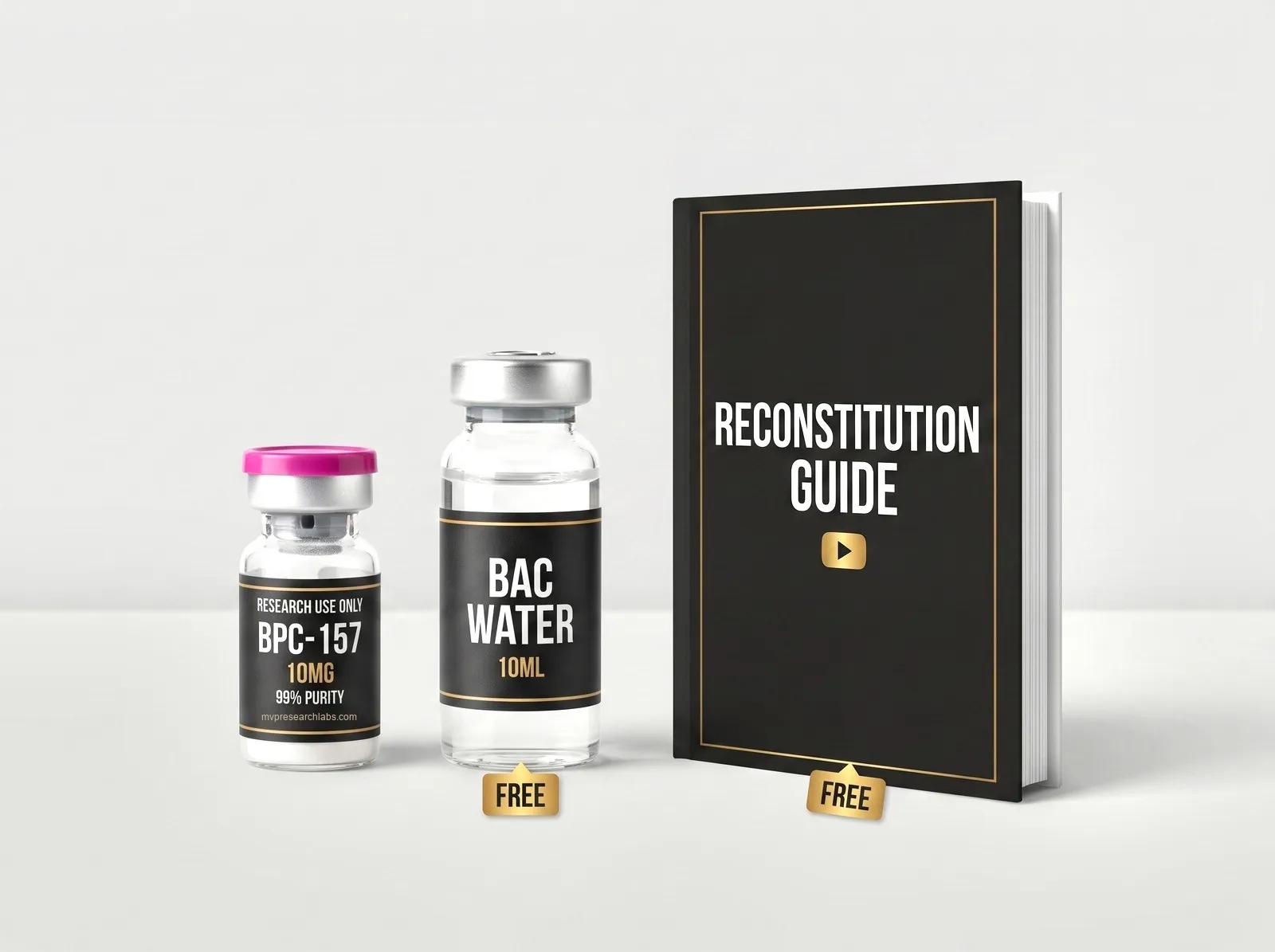
Bacteriostatic water and sterile water look identical in the vial, and both are used to dissolve lyophilized peptides. The difference is a single ingredient, a small amount of benzyl alcohol, and it decides how long an opened vial can stay in use and which experiments the solution is suitable for.
What is sterile water?
Sterile water is purified water that has been sterilized and packaged without any additives. It contains no preservative, so once the container is opened or its stopper punctured, nothing prevents microbes introduced during handling from growing. Sterile water is therefore meant for single use: open it, take what you need and discard the rest.
What is bacteriostatic water?
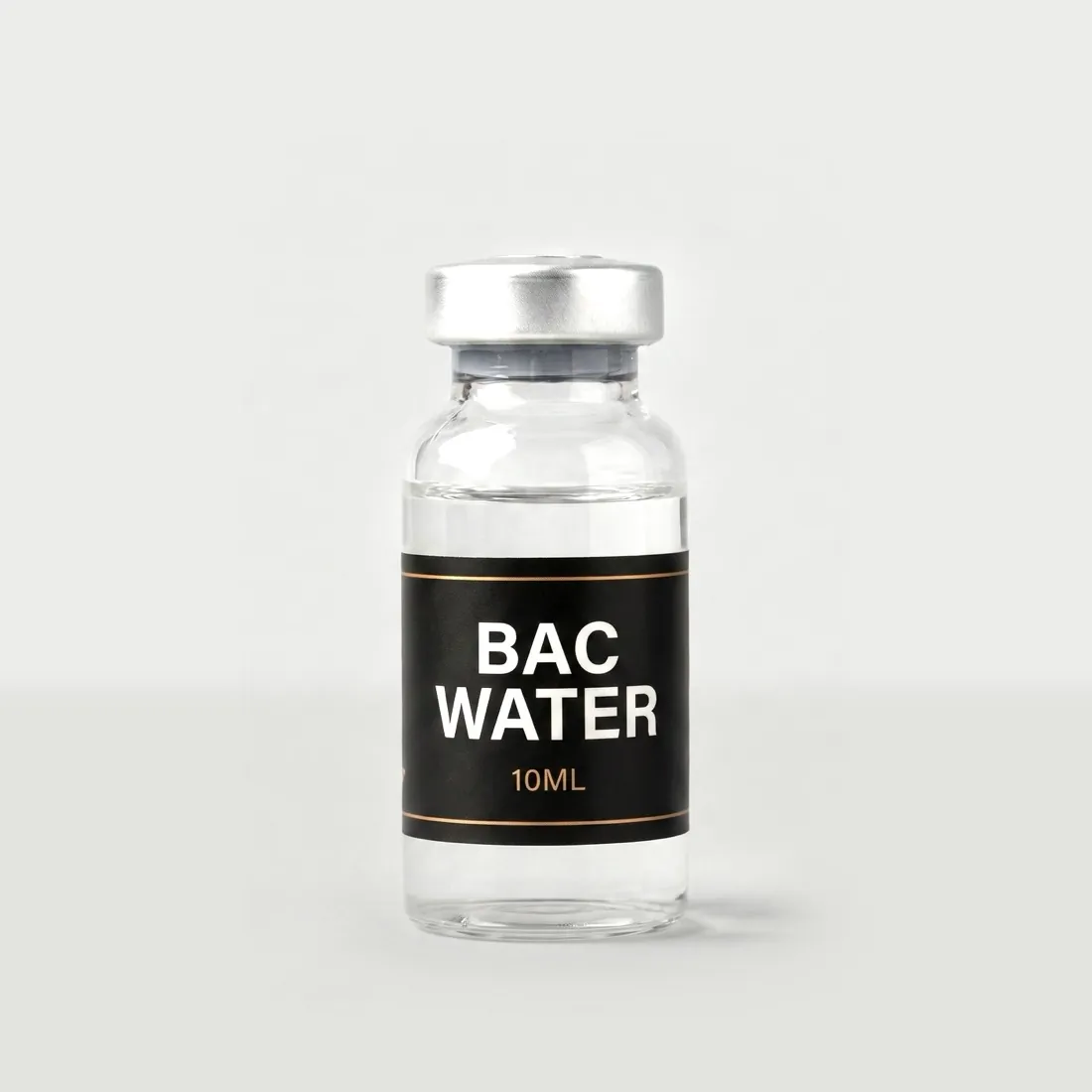
Bacteriostatic water is sterile water with 0.9% benzyl alcohol, about 9 mg per mL, added as a preservative. Benzyl alcohol does not sterilize the liquid, but it inhibits the growth of most bacteria. That makes the vial suitable for multiple withdrawals over a period of time, which is why it is the usual choice when a reconstituted peptide will be sampled repeatedly.
Side-by-side comparison
Preservative: sterile water has none; bacteriostatic water contains 0.9% benzyl alcohol.
Use after opening: sterile water is single-use; bacteriostatic water supports multiple withdrawals.
Assay compatibility: sterile water is neutral for nearly all assays; benzyl alcohol can interfere with some cell-based work and with preservative-sensitive proteins.
Typical choice: sterile water for a solution used right away or for sensitive assays; bacteriostatic water for a stock solution accessed over several days.
When benzyl alcohol can be a problem
Benzyl alcohol is a mild membrane-active compound. At preservative concentrations it can affect cell viability in sensitive cell cultures, and it has been reported to promote aggregation of some proteins. For cell-based assays, binding studies with preservative-sensitive targets, or peptides known to aggregate, sterile water or an appropriate sterile buffer is usually the safer diluent. If a preserved stock is used, confirm that the final benzyl alcohol concentration after dilution into the assay is low enough not to matter.
Other diluents worth knowing
0.1% to 1% acetic acid helps dissolve basic peptides and those that tend to aggregate at neutral pH.
Phosphate-buffered saline or other buffers are used when the assay requires physiological pH and ionic strength. Some peptides are less soluble in salt solutions, so dissolve them in water first and then dilute into buffer.
DMSO dissolves very hydrophobic peptides but should be kept to a low final concentration in biological assays. Peptides containing cysteine, methionine or tryptophan can oxidize in DMSO, and DMF is often used for them instead.
How to choose
Start from the experiment. If the entire solution will be used the same day, or the assay is sensitive to preservatives, use sterile water or buffer. If a stock will be sampled repeatedly over several days, bacteriostatic water limits microbial growth between withdrawals. In both cases, aliquoting and cold storage do more for stability than the choice of water alone.
Step-by-step peptide reconstitution guide →