Peptide Storage and Stability: Lyophilized vs. Reconstituted
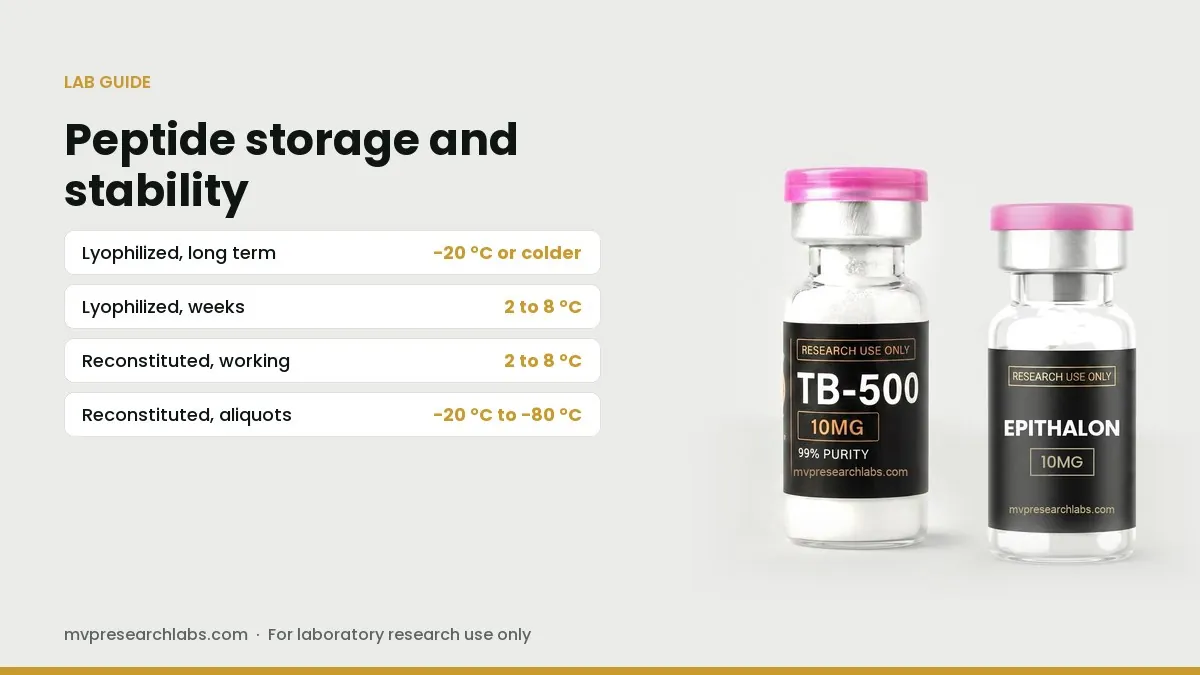
A peptide is only as reliable as the way it has been stored. Chemical degradation is often invisible, yet it can shift results long before a solution turns cloudy. A few consistent habits keep most peptides stable for a long time. This guide covers storage in the lyophilized state, storage after reconstitution, and the specific risks that different amino acids bring.
Why peptides degrade
Peptides break down through a handful of well-understood chemical pathways. Knowing them explains most storage rules:
Oxidation. Methionine, cysteine and tryptophan residues react with oxygen, a process accelerated by light, metal ions and higher pH.
Deamidation. Asparagine and, more slowly, glutamine lose their amide group, especially in neutral to basic solutions at higher temperatures.
Hydrolysis. Water cleaves peptide bonds over time, particularly next to aspartic acid residues and at extreme pH.
Cyclization. An N-terminal glutamine can cyclize to pyroglutamate, changing the mass and charge of the peptide.
Aggregation and adsorption. Some sequences clump together or stick to container walls, lowering the effective concentration without any change in chemistry.
Storing lyophilized peptides
In dry form most peptides are remarkably stable. For long-term storage, keep sealed vials at −20 °C or colder, protected from light. For shorter periods, such as a few weeks between receipt and use, 2 to 8 °C in a refrigerator is generally adequate. Moisture is the main enemy of the powder, so keep vials tightly closed, store them with a desiccant where possible, and always let a cold vial warm to room temperature before opening it.
Storing reconstituted peptides
Once dissolved, a peptide is far less stable than in powder form. As a general rule, keep working solutions at 2 to 8 °C and use them within days to a few weeks, depending on the sequence and the diluent. For anything longer, divide the solution into single-use aliquots and freeze them at −20 °C, or at −80 °C for sensitive sequences.
Freeze aliquots once and thaw each one only once. Every freeze–thaw cycle can promote aggregation.
A slightly acidic solution, around pH 5 to 6, slows deamidation and oxidation for many peptides.
Use low-protein-binding tubes for dilute solutions, where adsorption to the container can remove a meaningful fraction of the peptide.
Protect solutions of oxidation-prone peptides from light and keep the air space above the liquid small.
How long does a reconstituted peptide last?
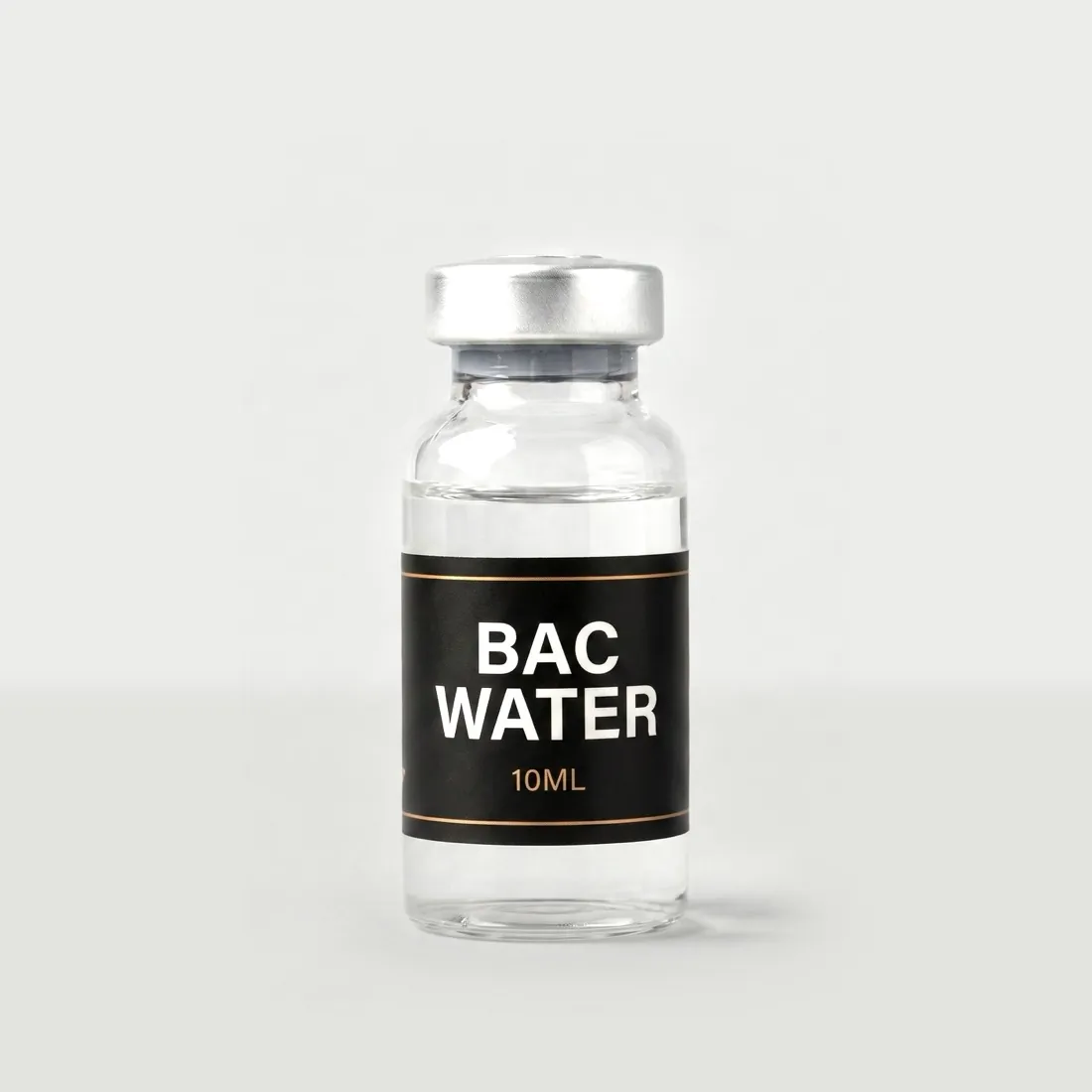
There is no single answer, because stability depends on the sequence, concentration, pH, diluent and temperature. A preserved diluent such as bacteriostatic water limits microbial growth but does not stop chemical degradation. In pharmacy practice, preserved multi-dose containers are commonly given a 28-day beyond-use date after first puncture under USP <797>, which is a useful upper reference point for how long a multi-access vial should stay in service. For quantitative work, confirm stability under your own conditions rather than relying on a general figure.
Bacteriostatic water vs. sterile water →
Signs a peptide may have degraded
The solution has turned cloudy, yellow or brown, or contains particles.
A lyophilized cake has collapsed into a sticky film, which suggests moisture exposure.
Assay results drift over time with the same stock solution.
HPLC shows new peaks or a smaller main peak compared with the original certificate.
When results matter, re-testing a stored sample by HPLC and mass spectrometry is the only reliable way to confirm that the material still matches its Certificate of Analysis.
How to read a peptide Certificate of Analysis →